

Blog
Pickleball: The Ultimate Guide to Rules, Gear, and Playing Like a Pro

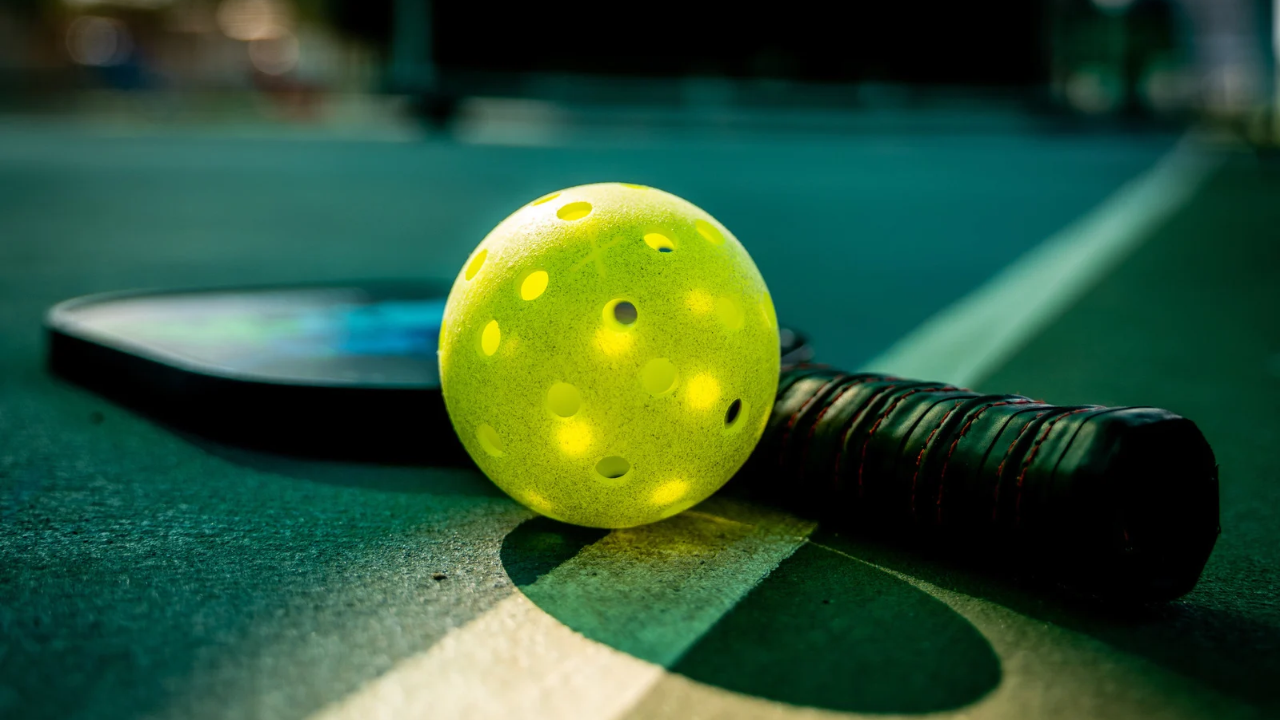
Pickleball has become one of the most talked-about paddle sports in the United States and around the world. Whether you are completely new to the game, an occasional player, or someone looking to improve your equipment, understanding the fundamentals of pickleball can make the sport more enjoyable and help you make better decisions on and off the court.
This complete guide explains what pickleball is, how the game works, the basic rules, court dimensions, scoring, equipment, paddle types, pickleball balls, beginner techniques, strategies, and how to choose the right gear for your playing style.
Whether your goal is to learn pickleball from scratch or become a more confident player, this guide gives you a practical foundation to start.
What Is Pickleball?
Pickleball is a paddle sport played on a compact court with a perforated plastic ball and solid paddles. It can be played as singles or doubles and combines elements commonly associated with tennis, badminton, and table tennis.
One of the defining characteristics of pickleball is its smaller court and slower-moving plastic ball compared with tennis. These characteristics can make it easier for beginners to learn the basic mechanics while still providing plenty of room for advanced strategy, positioning, shot selection, and competition.
Pickleball can be played recreationally, competitively, socially, indoors, or outdoors. Players can participate at many different skill levels, making the sport adaptable to a wide range of playing styles.
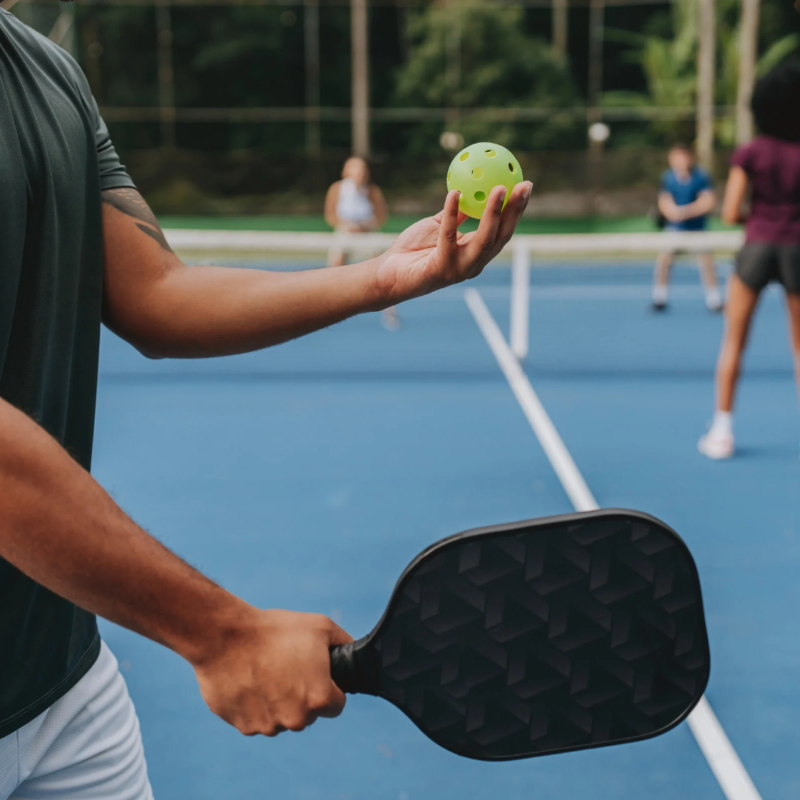
Why Is Pickleball So Popular?
Pickleball’s popularity has expanded dramatically in the United States. According to the Sports & Fitness Industry Association, 24.3 million Americans played pickleball in 2025, compared with approximately 4.2 million in 2020.
Several characteristics help explain the sport’s broad appeal.
Easy to Learn
The basic rules and fundamental strokes can be learned relatively quickly. Beginners can start playing without needing years of previous racket-sport experience.
Social and Competitive
Pickleball can be played casually with friends or competitively in organized matches and tournaments. This gives players different ways to enjoy the sport.
Equipment Is Relatively Simple
A basic pickleball setup can consist of paddles, balls, a net, and an appropriate playing surface. As players improve, they can explore different paddle shapes, materials, thicknesses, grips, balls, footwear, and accessories.
How Do You Play Pickleball?
The objective of pickleball is straightforward: hit the ball over the net and into the opponent’s court while making it difficult for the opponent to return the ball legally.
Players can use a combination of serves, returns, drives, drops, dinks, volleys, and other shots to control the rally.
A rally continues until a fault occurs. Depending on the scoring format and rules being used, points or serving opportunities are awarded according to the result of the rally.
For official competition, players should always consult the current rules published by the relevant governing organization. USA Pickleball publishes and updates its official rulebook annually.
Pickleball Court Dimensions
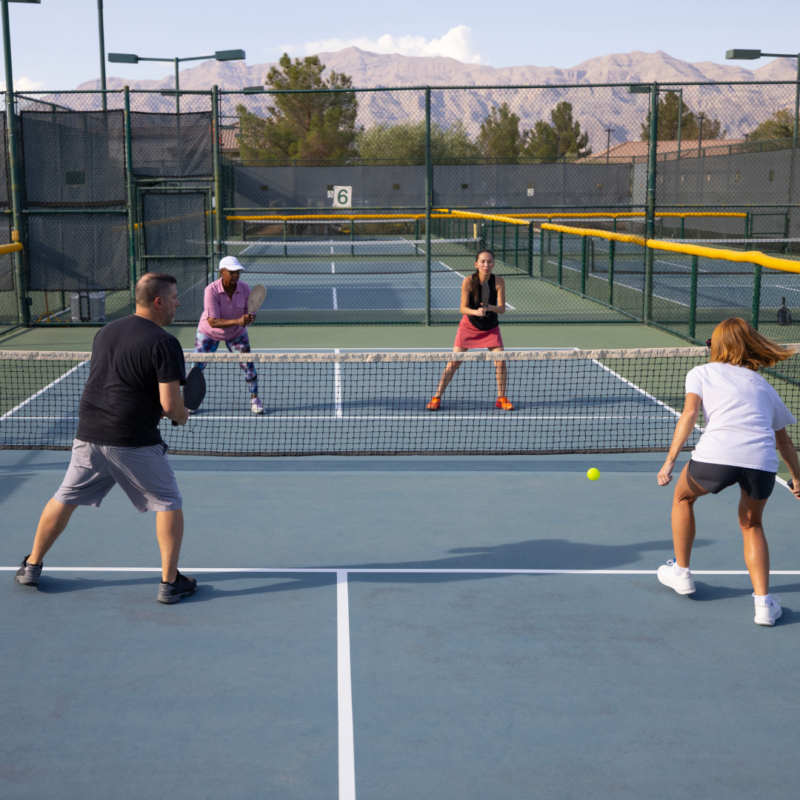
A standard pickleball court is 20 feet wide and 44 feet long for both singles and doubles play under USA Pickleball specifications.
The court is divided by a net and includes several important areas that every player should understand.
Baseline
The baseline is the back boundary of the court. Players serve from behind the baseline.
Sidelines
The sidelines define the width of the court.
Non-Volley Zone
The non-volley zone extends 7 feet from the net on each side. It is commonly called the “Kitchen.”
Understanding the Kitchen
The Kitchen is one of the most recognizable features of pickleball.
The official term is the Non-Volley Zone, or NVZ. The area extends 7 feet from the net on both sides.
A player cannot volley the ball while standing in the Kitchen or while touching the Kitchen line. Momentum after a volley can also result in a fault if the player or something the player is wearing or carrying touches the zone.
The Kitchen does not mean players are prohibited from entering the area. Players can enter the Kitchen when they are not volleying the ball.
Understanding this distinction is essential for beginners.
Pickleball Rules for Beginners
Pickleball rules can vary depending on the format and competition, so players should refer to the current official rulebook when accuracy is important. The following concepts are among the most important fundamentals for new players.
1. The Serve
The serve begins the rally. Under standard rules, the server must serve from behind the baseline and send the ball diagonally into the appropriate service court.
2. The Two-Bounce Rule
The two-bounce rule requires the served ball to bounce before the receiving player returns it, and the return must then bounce before the serving team can volley it.
After those required bounces, players can generally volley or play the ball after a bounce, subject to the other rules.
3. The Kitchen Rule
Players cannot volley while standing in the Non-Volley Zone or touching its line.
4. Faults
A fault ends a rally. Common faults include hitting the ball out of bounds, hitting the ball into the net, failing to follow serving requirements, and committing a non-volley-zone violation.
For the current official requirements, always check the latest USA Pickleball rules.
How Pickleball Scoring Works
Scoring is one of the areas that can confuse new players because pickleball has used different scoring formats and rules can vary by format.
Traditional side-out scoring awards points to the serving side when it wins a rally. Games are commonly played to 11 points, with a requirement to win by 2, although other formats may be used.
Rally scoring is another format in which a point can be awarded after each rally. Players should always confirm which scoring system is being used before beginning a match.
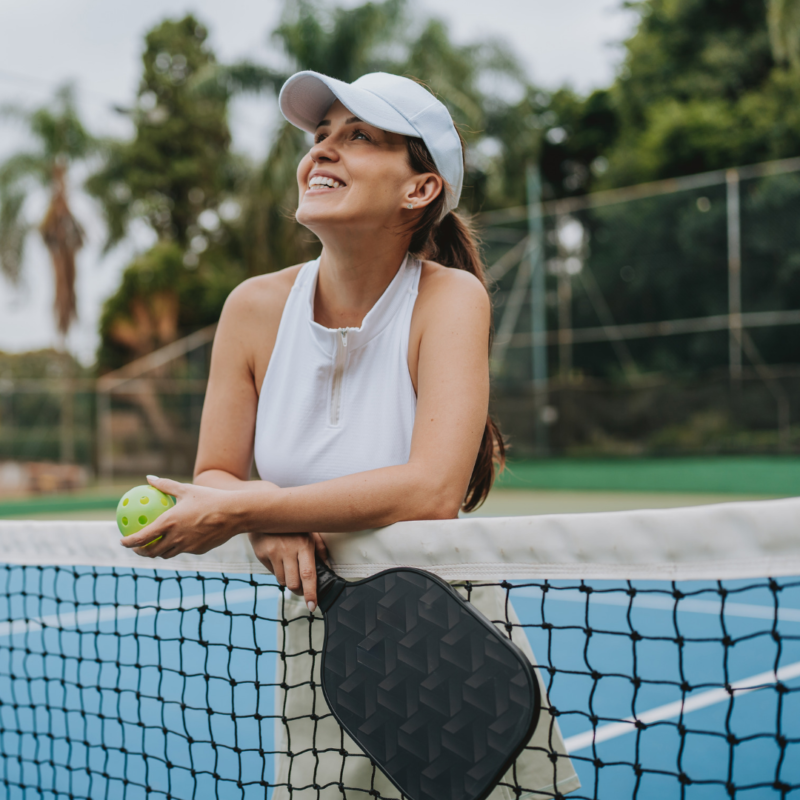
Pickleball Singles vs. Doubles
Pickleball can be played as singles or doubles.
Singles Pickleball
In singles, one player competes against one opponent. Players cover more of the court individually and must manage every shot themselves.
Doubles Pickleball
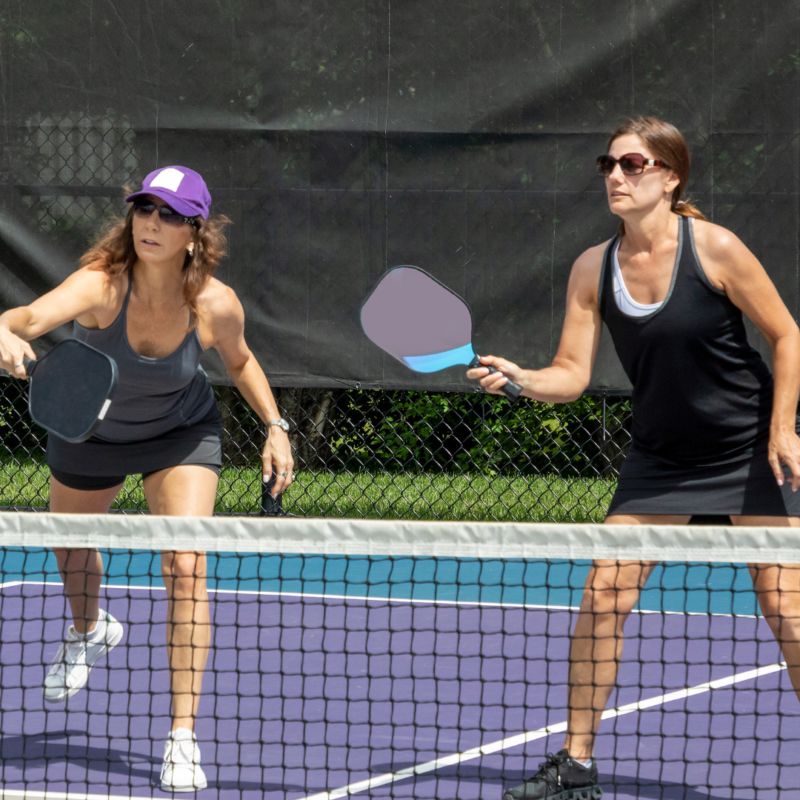
In doubles, two players form a team. Communication, positioning, teamwork, shot selection, and movement become particularly important.
For many recreational players, doubles is an especially social way to experience pickleball.
Pickleball Equipment
You do not need an enormous amount of equipment to start playing pickleball. However, choosing appropriate gear can make a meaningful difference in comfort, consistency, and enjoyment.
The essential equipment includes:
- Pickleball paddle
- Pickleball balls
- Pickleball net
- Court shoes
- Comfortable athletic clothing
Players may also use:
- Paddle grips
- Overgrips
- Edge guard protection
- Paddle covers
- Pickleball bags
- Ball retrievers
- Paddle care products
- Training accessories
How to Choose a Pickleball Paddle
Your pickleball paddle is one of the most important pieces of equipment you will own.
The right paddle depends on your skill level, preferred playing style, physical comfort, desired balance between control and power, and personal preferences.
Paddle Weight
Lighter paddles can feel quicker in the hand and may appeal to players who prioritize maneuverability.
Heavier paddles can provide a different feel and may appeal to players looking for additional stability and power.
There is no single ideal weight for every player.
Paddle Shape
Different paddle shapes can influence reach, sweet spot characteristics, maneuverability, and overall feel.
Grip Size
The grip should feel secure and comfortable in your hand. An appropriate grip can help you maintain control without unnecessarily squeezing the paddle.
Pickleball Paddle Materials
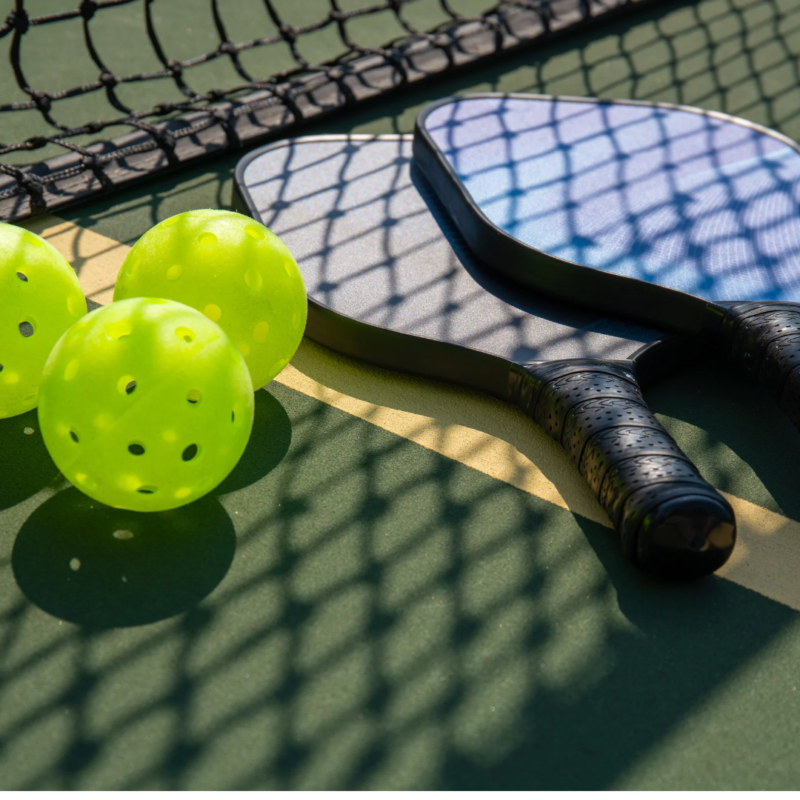
Pickleball paddles are made using different materials and construction methods.
Common paddle materials include fiberglass and carbon-based materials.
Fiberglass Paddles
Fiberglass paddles can provide a distinctive combination of responsiveness and power. They are often considered by recreational and developing players who want an approachable paddle.
Carbon Fiber Paddles
Carbon fiber and raw carbon constructions are popular among players looking for particular combinations of feel, control, consistency, and performance characteristics.
The best material depends on the player’s preferences and the specific paddle construction.
Paddle Thickness: 13mm vs. 16mm
Paddle thickness is another factor players frequently consider.
13mm Paddles
A thinner paddle can appeal to players looking for a more responsive feel, maneuverability, and additional power characteristics depending on the paddle’s construction.
16mm Paddles
A thicker paddle is often associated with a softer feel and greater emphasis on control, although the actual performance depends on the complete paddle design.
Thickness should never be considered in isolation. Weight, shape, core, surface material, balance, and construction all influence how a paddle plays.
Pickleball Balls
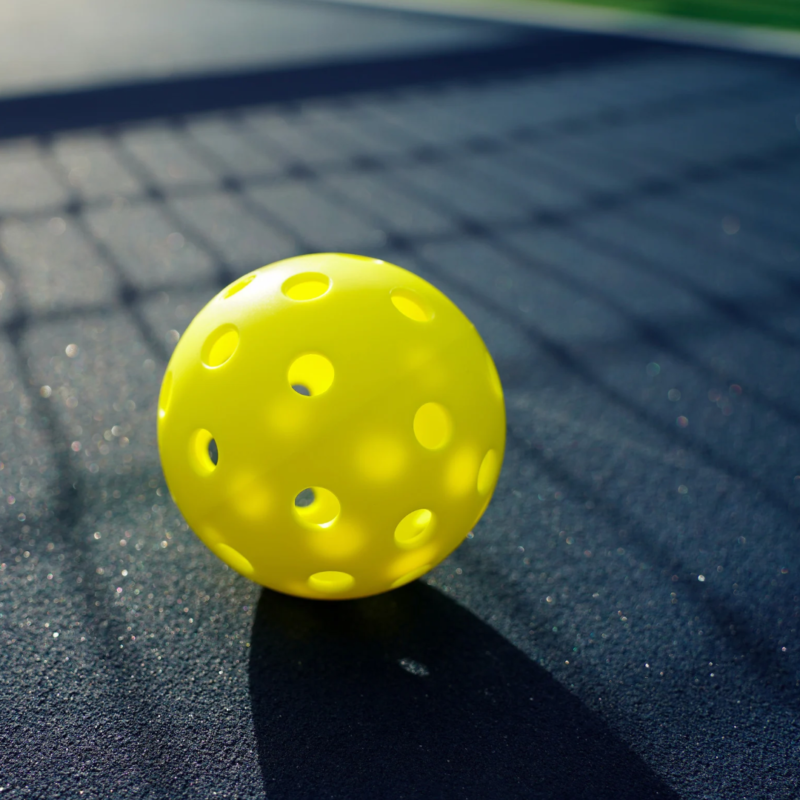
Pickleball balls are lightweight plastic balls with holes through the surface.
The ball is an important part of how pickleball feels and plays because its weight, construction, hole pattern, and design influence flight and bounce characteristics.
USA Pickleball’s equipment standards specify requirements for approved balls, including dimensions and weight.
Indoor vs. Outdoor Pickleballs
Not every pickleball ball is designed for the same environment.
Outdoor Pickleballs
Outdoor balls are designed for outdoor playing conditions and commonly have characteristics suited to wind and outdoor surfaces.
Indoor Pickleballs
Indoor balls are designed for indoor court environments and can have different characteristics from outdoor balls.
Choosing the correct ball for the playing environment can help provide a more predictable playing experience.
Pickleball Shoes
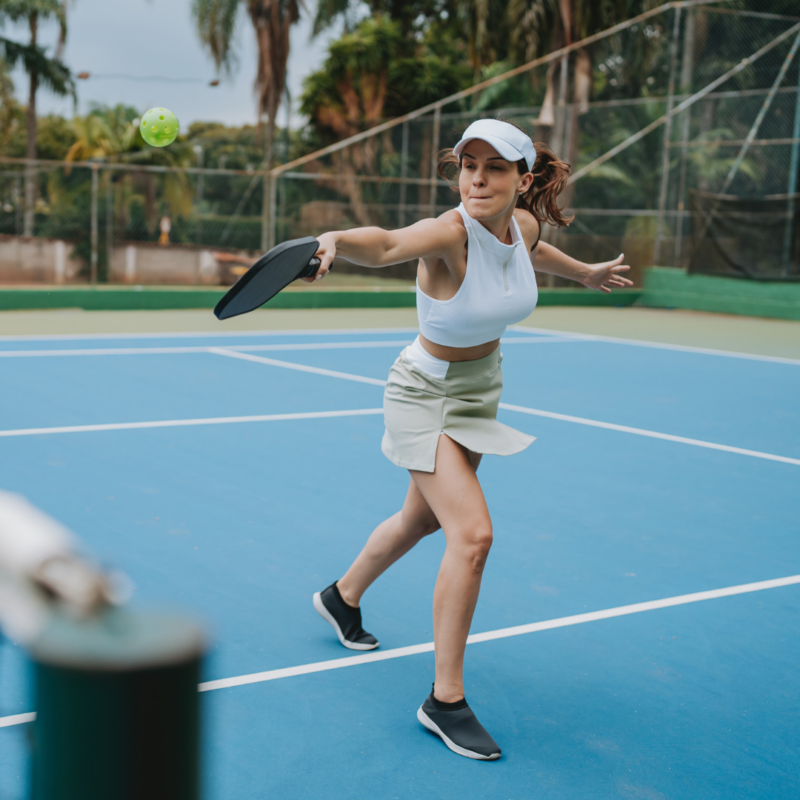
Footwork is a major part of pickleball. Players repeatedly accelerate, stop, change direction, move laterally, and react to shots.
For this reason, footwear designed for court movement can be an important part of a player’s equipment setup.
Look for footwear that provides an appropriate fit, stability, traction for the intended court surface, and comfort.
Pickleball Bags and Accessories
As your equipment collection grows, organization becomes increasingly useful.
A pickleball bag can help keep paddles, balls, clothing, shoes, towels, grips, and accessories together.
Other useful accessories can include paddle covers, overgrips, edge protection, ball retrievers, and paddle-care products.
Basic Pickleball Shots
Learning the fundamental shots gives beginners a foundation for developing better technique and strategy.
Serve
The serve starts the rally and is used to put the ball into play.
Return of Serve
The return sends the opponent’s serve back into play and is an important opportunity to establish court position.
Drive
A drive is a more aggressive shot designed to move the ball with pace.
Drop
A drop shot is designed to land softly in or near the Kitchen, making it more difficult for an opponent to attack aggressively.
Dink
A dink is a soft shot played around the Kitchen area. Dinking can be used to create patience-based rallies and force opponents to make difficult decisions.
Volley
A volley is a shot hit before the ball bounces.
Pickleball Strategy for Beginners
Good pickleball strategy is not simply about hitting the ball as hard as possible.
Players must consider placement, positioning, patience, consistency, and their opponent’s position.
Control the Center
In doubles, controlling the middle of the court can reduce the angles available to opponents.
Avoid Unnecessary Errors
A powerful shot is not useful if it repeatedly results in an error.
Be Patient
Pickleball often rewards patience. Soft shots, controlled placement, and waiting for the right opportunity can be more effective than attacking every ball.
Move With Your Partner
In doubles, partners should communicate and move together rather than leaving large gaps between them.
Common Pickleball Mistakes
Beginners often make similar mistakes when learning the game.
Hitting Too Hard
Trying to hit every ball with maximum power can lead to unnecessary errors.
Standing Too Close to the Baseline
Players need enough space to react to deep balls and execute their next shot.
Ignoring Positioning
Where you stand can be just as important as how you hit the ball.
Rushing the Kitchen
Players should move forward with purpose rather than rushing without control.
Using the Wrong Equipment
A paddle that is too heavy, too light, uncomfortable, or poorly matched to a player’s preferences can affect the overall experience.
How to Improve at Pickleball
Improvement comes from combining practice, better decision-making, movement, consistency, and understanding of the game.
Practice Your Serve
A consistent serve gives you a reliable way to start each rally.
Practice Your Return
A strong, controlled return can help you establish better court position.
Learn the Dink
Developing a controlled soft game is an important part of becoming a more complete pickleball player.
Improve Footwork
Good movement allows you to reach more balls while maintaining better balance and preparation.
Study Your Equipment
Understanding how your paddle, ball, shoes, and accessories affect your experience can help you make more informed equipment choices.
Pickleball for Beginners: What Do You Really Need?
If you are just starting pickleball, you do not need to purchase everything at once.
A practical beginner setup can include:
- One comfortable pickleball paddle
- A suitable set of pickleballs
- Comfortable court shoes
- Athletic clothing
- A paddle cover or bag for protection and transportation
As you play more frequently, you can identify which areas of your equipment setup deserve an upgrade.
How to Choose the Right Pickleball Equipment
The best equipment is not necessarily the most expensive equipment.
Instead, consider what matches your experience level, playing environment, physical preferences, and goals.
Before purchasing a paddle, consider:
- Weight
- Thickness
- Shape
- Grip size
- Material
- Balance
- Playing style
- Skill level
For balls, consider whether you primarily play indoors or outdoors.
For footwear, consider fit, stability, comfort, and the surface where you play.
Pickleball Equipment Maintenance
Taking care of your equipment can help keep it in better condition over time.
Protect Your Paddle
Avoid unnecessary impacts against hard surfaces and use a paddle cover when transporting the paddle.
Maintain Your Grip
An overgrip can help maintain a comfortable and secure handle feel when the original grip needs additional comfort or replacement.
Inspect the Edge
Regularly check the paddle’s edge protection for visible wear or damage.
Store Equipment Properly
Keep paddles, balls, and accessories organized and protected when they are not being used.
Pickleball Terms Every Beginner Should Know
Dink
A soft shot commonly played near the Kitchen.
Drive
A faster, more aggressive shot.
Drop
A softer shot intended to land in the opponent’s court with controlled pace.
Volley
Hitting the ball before it bounces.
Kitchen
The common nickname for the Non-Volley Zone.
NVZ
Abbreviation for Non-Volley Zone.
Rally
The sequence of shots exchanged between players.
Fault
A rule violation that ends the rally.
Sweet Spot
The area of the paddle face where contact often feels most effective or consistent.
Frequently Asked Questions About Pickleball
What is pickleball?
Pickleball is a paddle sport played with solid paddles and a perforated plastic ball on a court smaller than a tennis court.
Is pickleball easy to learn?
The basic concepts of pickleball can be relatively accessible to beginners, although becoming highly skilled requires practice, technique, movement, strategy, and experience.
Is pickleball played indoors or outdoors?
Both. Pickleball can be played indoors and outdoors, although the playing environment can affect ball choice, court conditions, and equipment considerations.
How big is a pickleball court?
A standard pickleball court is 20 feet wide by 44 feet long.
What is the Kitchen in pickleball?
The Kitchen is the common name for the Non-Volley Zone, the 7-foot area extending from the net on each side.
What paddle should a beginner use?
A beginner should look for a paddle that feels comfortable, manageable, and appropriate for their playing style. Weight, grip, thickness, shape, and material are all worth considering.
Is a 13mm or 16mm pickleball paddle better?
Neither thickness is automatically better for every player. A 13mm and a 16mm paddle can produce different playing characteristics, and the best choice depends on the player’s preferences and the complete paddle construction.
How many people play pickleball in the United States?
The Sports & Fitness Industry Association reported 24.3 million U.S. pickleball participants in 2025.
What equipment do I need to play pickleball?
At minimum, you need an appropriate paddle, pickleball balls, and access to a suitable court and net. Court shoes and other accessories can improve comfort and organization.
Pickleball Is More Than a Sport
Pickleball is not only about the equipment or the score. It is about movement, timing, decision-making, competition, practice, and the experience of sharing the court with other players.
For beginners, the most important step is simply to start playing and learn the fundamentals one step at a time.
As your experience grows, you can begin to refine your technique, improve your positioning, experiment with different strategies, and choose equipment that better matches your game.
Your Pickleball Journey Starts With the Right Gear
Whether you’re buying your first paddle, upgrading your current setup, looking for pickleballs, protecting your equipment, or building a complete pickleball kit, having access to the right gear makes the experience easier.
Discover DinkArmor
DinkArmor is an online pickleball store specializing in products for players who want to enjoy, improve, protect, and support their game.
From pickleball paddles and balls to bags, paddle covers, grips, paddle-care products, court apparel, footwear, accessories, and more, DinkArmor is built around one goal: helping players find the gear they need for the game they love.
DinkArmor ships worldwide, so pickleball players around the globe can explore equipment and accessories in one dedicated online store.
Ready to gear up for your next game?
Explore DinkArmor and discover pickleball gear for every stage of your game.
Explore our complete collection of pickleball products today at DinkArmor Online Store!
Final Thoughts
Pickleball continues to attract players who appreciate its combination of accessible fundamentals, strategic depth, social interaction, and competitive potential.
Learning the rules is only the beginning. As you play, you will discover that paddle selection, ball choice, positioning, shot selection, movement, and strategy all contribute to the way the game feels and develops.
Whether you’re stepping onto a pickleball court for the first time or looking for your next equipment upgrade, the best approach is to keep learning, keep practicing, and choose equipment that fits your game.
Welcome to pickleball.
Welcome to DinkArmor.
Guard Your Game.
Ready to dominate the kitchen and elevate your performance? Explore our complete collection of pickleball products today at DinkArmor Online Store!